
Sailing the Amalfi Coast by Catamaran: Naples to Capri 7-Day Route
Sail Naples to Capri, Positano and Amalfi by catamaran. Full 7-day itinerary, base ports, anchorages, mooring fees and costs for 2026 charters.
Read more
Updated May 2026.
Sardinia is the most distinctive catamaran charter coast in the western Mediterranean. Granite islets and turquoise lagoons of the La Maddalena Archipelago, the Costa Smeralda’s premium marinas, the limestone monolith of Tavolara, the sheltered Orosei Gulf coves accessible only by boat, the powdered-sugar beaches of the northwest — all sit within a single charter week. This is the working catamaran-charterer’s guide to the 12 Sardinian stops you should not miss, organised roughly geographically from north to east to west, with the anchorage detail (holding, depth, shelter, mooring fees) you actually need. A sample 7-day route sits at the end. For the wider Italian charter picture, see our Catamaran charter Italy 2026 guide.
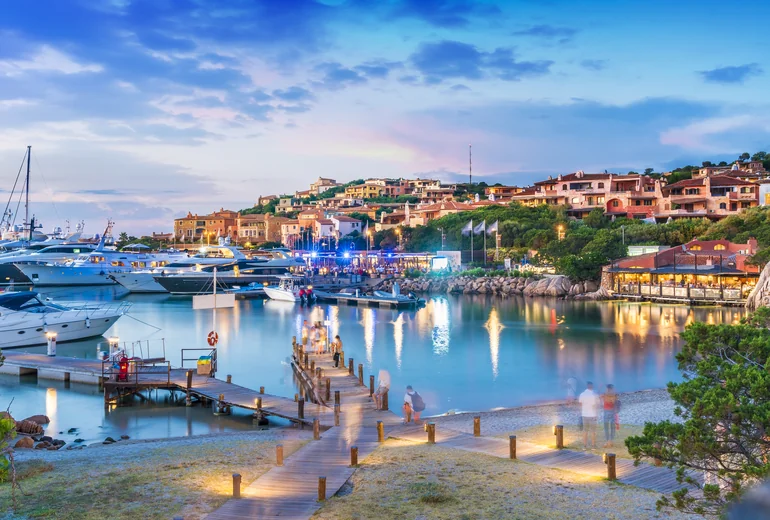
Porto Cervo’s marina is the most photographed harbour in the western Mediterranean and one of the most expensive. Charter catamarans pay €400–700 per night for a 45–50-foot berth in peak season; €600–1,200 for boats over 50 feet. The town itself was designed in the 1960s by the Aga Khan and remains the social centre of the Costa Smeralda. Worth one overnight for the experience — the post-dinner walk along the marina is part of any Sardinian charter — then move on. Anchoring is possible in Porto Cervo bay (3-5 metres on sand, exposed in northerlies); most charterers take a buoy at Cala di Volpe next door, then tender into Porto Cervo for the evening.
Three nautical miles south of Porto Cervo, Cala di Volpe is a deeper, calmer bay protected from the maestral. Anchorage in 6-10 metres on sand-bottom holds well; the inshore mooring buoys belong to the Cala di Volpe hotel and cost €80–180 per night. The Cala di Volpe Hotel’s outdoor pool and beach club are an established part of the Costa Smeralda routine. Day stop or overnight; pairs well with a Porto Cervo dinner.
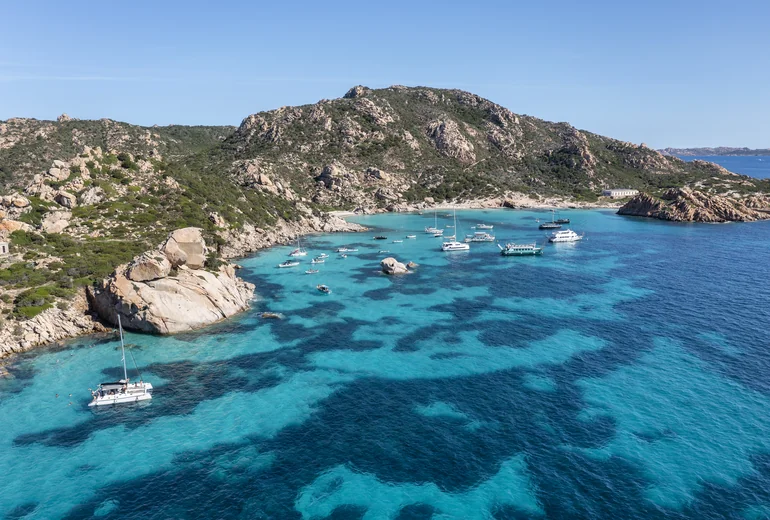
La Maddalena is a national park covering 7 main islands and roughly 50 smaller islets between Sardinia and Corsica. The park enforces a strict mooring-buoy system: anchoring is forbidden in most marked zones; mooring is on paid buoys booked through www.lamaddalenapark.it. Buoys go on sale 30 days ahead at 09:00 sharp; popular slots fill within minutes. Fees in 2026 run €40–120 per night depending on boat size and bay. Park entrance fees apply additionally (€5–15 per person per day). The park is mandatory on any northeast-Sardinia charter — see private yacht charter northern Sardinia for the deep-dive on the archipelago.
Spargi is the southwestern island of La Maddalena. Its eastern bay, Cala Soraya, is the most-photographed anchorage in the archipelago — turquoise water, granite-and-sand bottom in 4-8 metres, full shelter from the prevailing west-northwesterly. Buoys are first-come-first-served once you arrive; the park ranger boat circulates daily. Don’t miss Cala Granara on Spargi’s south side, a smaller bay that takes the overflow when Cala Soraya fills.
Budelli’s southeastern shore is the famous Spiaggia Rosa — the Pink Beach, coloured by crushed shells in the sand. Critical rule: anchoring and landing are forbidden under park regulations. You can pass close, photograph from the water, and admire from the boat; you cannot drop a hook or walk the beach. The park’s enforcement boat is active. Combine with a swim at the adjacent Spiaggia del Cavaliere beach where anchoring is permitted.
Santa Maria has a small year-round community and a handful of restaurant pontoons; Caprera is dominated by Garibaldi’s old residence and museum. Both islands have permitted anchorages on the leeward side. Cala Coticcio on Caprera’s northeast tip is one of the prettiest anchorages in the archipelago — turquoise water, fine sand, full shelter from the maestral. The walk from the bay to the Coticcio cliffs takes 20 minutes and is the most-photographed land excursion on a Sardinian charter.
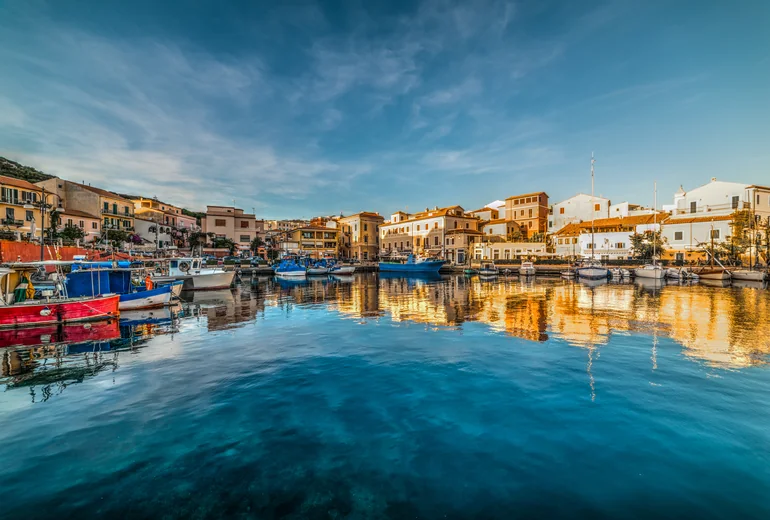
The town of La Maddalena sits on the eponymous main island and is the only proper provisioning stop inside the park. Marina di La Maddalena and the smaller Cala Mangiavolpe quay accept charter boats; rates run €60–120 per night for a 45-foot cat. Stock up on fresh produce for the rest of the archipelago — the smaller islands have no shops. Walk the seafront for dinner; the Trattoria Il Marinaio is the standard charter-crew restaurant on the harbour.
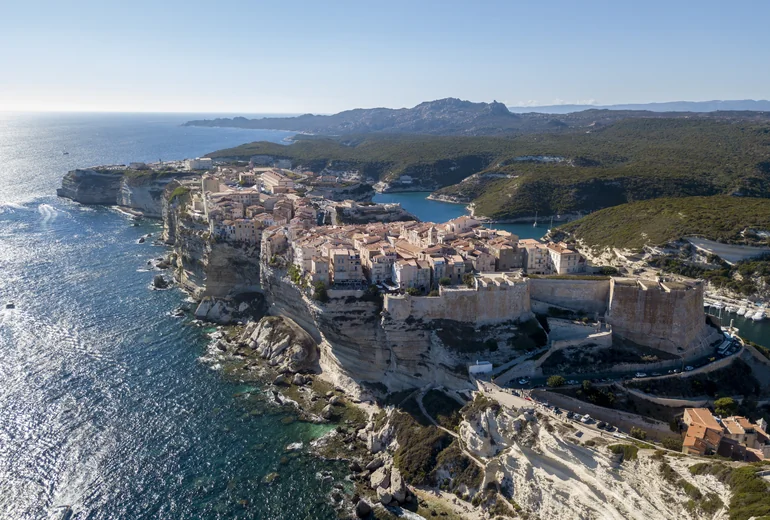
Bonifacio sits 7 nautical miles north of La Maddalena’s western edge — France, not Italy, but the crossing is short and routine in normal summer weather. The harbour is a fjord cut into limestone cliffs, with the medieval citadel above. Marina rates in season run €150-280 for a 45-foot berth — bookable ahead, often full from June 25. Most charterers do Bonifacio as a long-day return: arrive by 11:00, lunch in the citadel, walk the medieval streets, depart by 17:00, sleep back in Sardinia. The Sardinia-Corsica yacht holiday piece covers the longer two-country format.
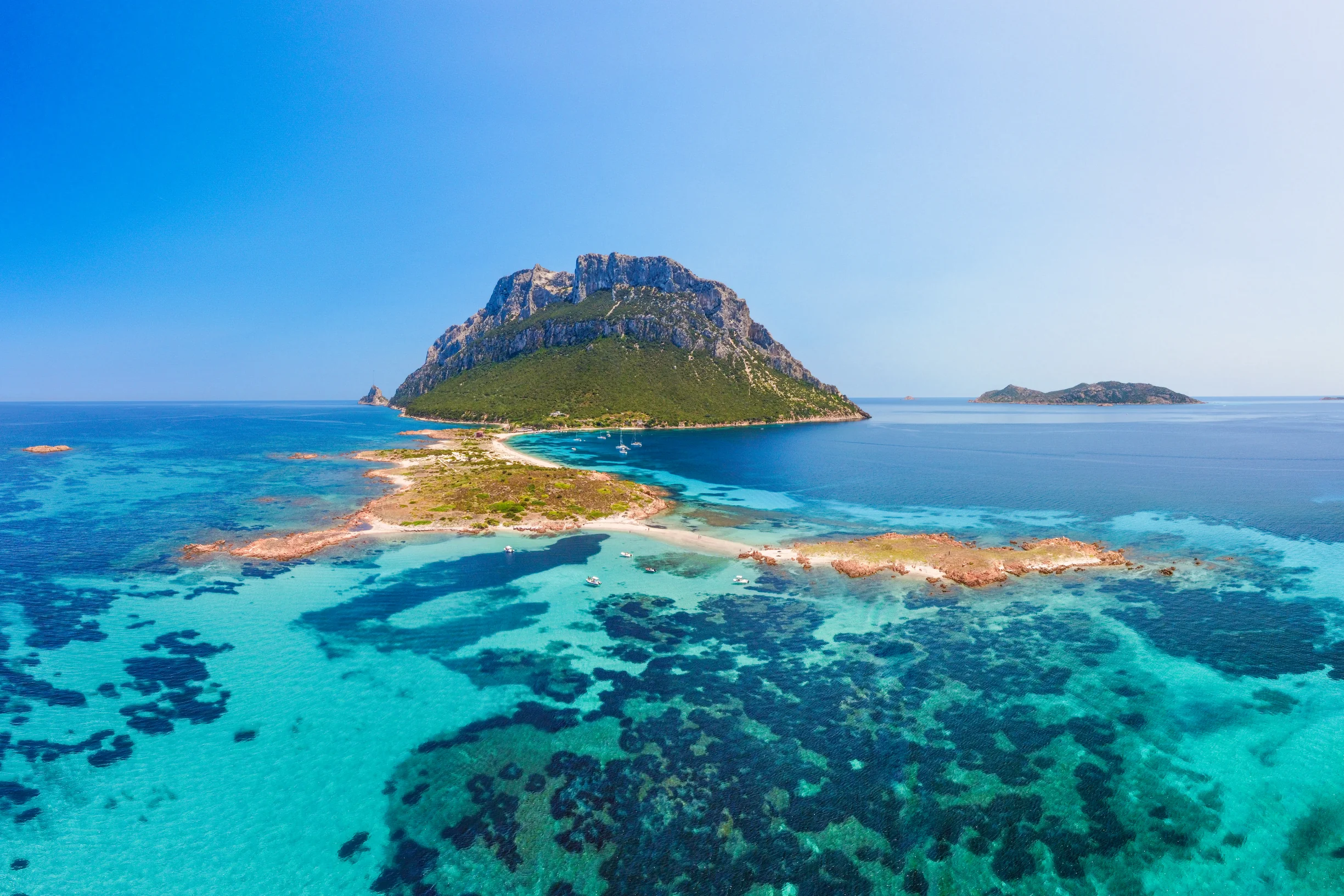
Tavolara rises 565 metres straight out of the sea 12 nautical miles southeast of Olbia. The island is uninhabited except for a handful of families and the small Marine Protected Area office. Anchorage on the southwest side at Spalmatore di Terra is the standard stop — sand bottom in 6-10 metres, full shelter from the prevailing winds. The walk along the southwest beach reveals one of the most distinctive views on the Italian coast. Highlight of a north-east Sardinia week, often skipped by crews focused only on La Maddalena. See beaches between Olbia and Golfo Aranci for the area’s full picture.
Just south of Tavolara, Capo Coda Cavallo and the adjacent Cala Brandinchi beach earn their “Sardinian Caribbean” nickname — fine white sand, turquoise water in 2-4 metres extending hundreds of metres offshore. Anchoring is permitted on sand bottom outside the marked swimming zone. Lunch stop or overnight; the bay is exposed to easterlies and not recommended in a sirocco. Combine with Tavolara for a complete 2-day northeast-Sardinia mini-route.
The Orosei Gulf on Sardinia’s east coast holds three coves that define a Sardinian charter: Cala Goloritzé (the most-photographed limestone arch in Italy, accessible only by boat or a 3-hour hike), Cala Mariolu (pebble beach in a steep-sided cove), and Cala Luna (sandy beach with sea caves at the southern end). All three are sheltered from prevailing winds, anchorage in 6-12 metres on sand-and-pebble, day-use only (anchoring is restricted at night in marked zones). Goloritzé charges a €5 per-person landing fee in season. A long charter day visits all three; most weeks pick one or two and overnight at Cala Gonone or Cala Liberotto.
Alghero is the Catalan-speaking medieval walled town on Sardinia’s northwest coast, 50 nautical miles west of Stintino. Marina di Sant’Elmo handles charter boats; rates €80-140 per night. The town is the most architecturally distinctive on Sardinia — narrow lanes, Catalan-Aragonese fortifications, working seafront. Capo Caccia, 12 NM northwest of Alghero, has the famous Neptune’s Grotto (Grotta di Nettuno) accessible by tender from the cape’s small port. A long-distance Sardinian charter (2 weeks) reaches Alghero; a 1-week northeast charter rarely does.
Stintino and La Pelosa beach — at the northwestern tip of Sardinia, La Pelosa is the most-photographed beach in the country, a powder-sugar shoreline backed by the Asinara national park. Strict daily-visitor cap; book entry online. Asinara National Park — uninhabited national-park island 2 NM offshore from La Pelosa, accessible only with park-authorised boats or escorted tours. Wild horses, white donkeys, former-prison ruins. Villasimius and Capo Carbonara — Sardinia’s southeast tip, marine reserve with sandy anchorages and emerald water; the long-southerly extension of a Sardinian charter, more common on a two-week Olbia → Cagliari route.
The standard Sardinian week from Marina di Olbia:
Day 1: Olbia → Cala di Volpe (12 NM). Cast off, sail north up the Costa Smeralda. Mooring buoy at Cala di Volpe; tender into Porto Cervo for the evening.
Day 2: Cala di Volpe → Spargi, La Maddalena Archipelago (15 NM). Enter the park. Cala Soraya buoy mooring (booked online 30 days ahead).
Day 3: Spargi → Budelli → Caprera (15 NM). Pass the Pink Beach (no anchoring), photograph from the water. Overnight at Cala Coticcio on Caprera.
Day 4: Caprera → Bonifacio (8 NM crossing). Long-day return: arrive by 11:00, lunch in the citadel, walk, depart by 17:00, sleep at La Maddalena town.
Day 5: La Maddalena → Tavolara (24 NM). Sail south past the Costa Smeralda. Anchor at Spalmatore di Terra; walk the southwest beach at sunset.
Day 6: Tavolara → Cala Brandinchi → Olbia (15 NM). Lunch swim at Cala Brandinchi (sand bottom in 3 metres, “Sardinia’s Caribbean”); afternoon sail back to the Olbia area.
Day 7: Olbia → Marina di Olbia (5 NM). Direct return for the 13:00 handover.
Total: ~95 nautical miles. The shortest cruising ground in the western Mediterranean — tight, sheltered, every anchorage protected. See sailing around Olbia 7-day itinerary for a parallel version of this route and 7-day sailing adventure in northern Sardinia for an alternative routing.
May–June: water at 19–22°C by late June, anchorages empty, prices 15-25% under peak. The smart-charter window. La Maddalena buoys still bookable 30 days ahead without the peak-week scramble.
July–August: peak Italian holiday. Costa Smeralda marinas full from June 25; Cala di Volpe and Cala Coticcio buoys booked weeks ahead. La Maddalena ranger boats patrol aggressively. Charter prices peak.
September: the locals’ month. Italians return to work, water at peak summer temperature (24°C), prices drop sharply. The single best month if you can pick. See weather conditions for sailing in Sardinia for the full month-by-month breakdown.
October: shoulder season. Some La Maddalena services scale back after October 15; the Bonifacio crossing becomes weather-dependent. Still a viable Sardinian charter window for crews flexible on dates.
Sardinian anchoring is among the most regulated in the Italian charter market. La Maddalena: permit buoys only, booked online 30 days ahead. Tavolara Marine Protected Area: anchoring permitted on sand bottom in marked zones only; the protected-area office monitors. Capo Carbonara Marine Reserve: similar to Tavolara, buoy moorings at Villasimius. Asinara National Park: by-permit only, no independent anchoring. Posidonia restrictions apply across most of the Sardinian seabed — anchoring on the protected seagrass carries fines of €100-500 per occurrence. Charter boats now ship with the official Posidonia map app; use it before dropping the hook. The best anchorages in Italy piece covers the practical rules in detail.
Provisioning at Olbia is good — Conad, Lidl, Esselunga all within 10 minutes of Marina di Olbia. La Maddalena town has the best provisioning inside the archipelago; smaller islands have only village shops or restaurant pontoons. Bonifacio has full provisioning if you stop there. Alghero and Cala Gonone (Orosei Gulf) have working harbour-side shops. Diesel runs €1.90–2.20 per litre in 2026 — Italian fuel is among the most expensive in the Mediterranean. Plan refuelling around major harbours; the smaller La Maddalena islands and the Orosei Gulf coves have no fuel. The Sardinian specialties piece covers what to look for at the local markets.
Sardinian catamaran charter favours the 40-45 foot tier — Costa Smeralda’s premium marinas (Porto Cervo, Cala di Volpe) have berth-width restrictions that penalise wider cats. La Maddalena buoy fees scale with boat size; the 45-foot tier hits the cost sweet spot. For groups of 8 or fewer, the 42-45 foot tier (Lagoon 42, Bali 4.4, Fountaine Pajot Astréa 42) is the most-chartered. For groups of 10-12, the 50-foot tier (Lagoon 51, Bali 5.4) works but costs noticeably more in marina nights. How do I choose the right catamaran for my trip covers the layout choice.
For a 7-day mid-June 2026 catamaran charter from Olbia, crew of 8:
— 45-foot catamaran (bareboat): €15,000–20,000 boat + €1,000-1,500 fuel + €600-1,200 La Maddalena buoys/permits + €450-900 marina overnights (2 nights) + €1,000-1,300 provisioning + €1,200 dinners ashore = €19,250-25,900 total (€2,400-3,240 per person).
— Add a hostess: +€1,300-1,500.
— Add a skipper: +€1,750-2,000.
— Fully crewed (skipper + hostess): adds ~€3,000-3,500 to the total.
The Sardinian premium runs 15-25% above Greek and Croatian equivalents. The granite-bottom anchorages, the regulated parks, and the Costa Smeralda’s high marina rates drive the gap. How much does it cost to rent a catamaran in Italy walks through the comparison.
Italy accepts the ICC, RYA Day Skipper, US Sailing Bareboat, and equivalent qualifications for the registered skipper. A separate VHF radio certificate is also required by most operators. Catamaran security deposits run €5,000-8,000. La Maddalena buoy reservations open 30 days before each date — set a calendar reminder. Peak-summer (mid-July to mid-August) charter weeks book by November of the preceding year for premium catamaran inventory. Shoulder weeks (June, mid-September) bookable 2-4 months ahead. The sailing licence requirements piece covers the full credential picture.
Mid-September. Water at its summer peak (24°C), schoolkids gone, prices off the peak, anchorages workable. Mid-June is a close second — slightly cooler water but minimal crowds. Avoid August unless you can absorb peak pricing and marina pressure.
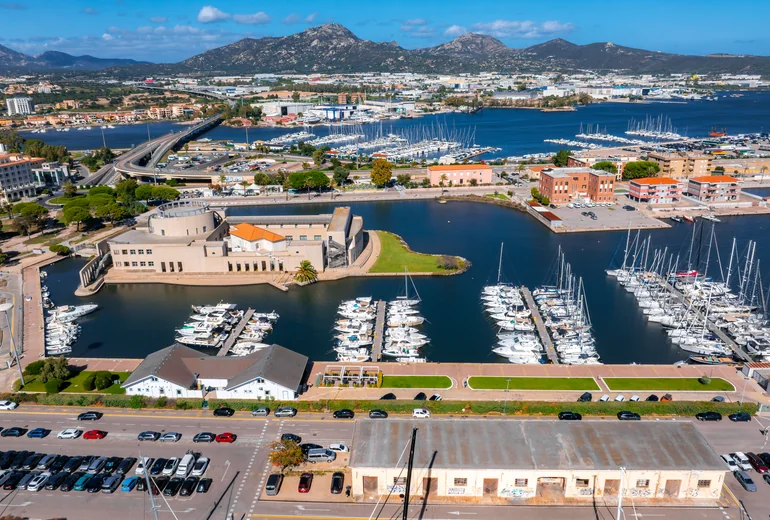
Marina di Olbia. The airport sits 15 minutes from the marina, the fleet is the largest in Sardinia, and the position is central for the northeast cruising ground. Cannigione and Portisco are smaller alternatives closer to the Costa Smeralda. Cagliari serves the southern coast but with smaller charter fleet.
Yes — La Maddalena is a strict permit-buoy national park, and anchoring is forbidden in most zones. Buoys cost €40-120 per night depending on bay and boat size, booked online through lamaddalenapark.it 30 days ahead. Park entry fees apply additionally at €5-15 per person per day.
Yes — the Bouches de Bonifacio crossing is 7 NM from the western edge of La Maddalena. A 7-day route easily fits a Bonifacio day-trip on Day 3 or 4. Multi-week charters often extend through Corsica’s southern bays. The Sardinia-Corsica yacht holiday piece covers the longer two-country format.
Yes, roughly 15-25% more. Costa Smeralda’s marina rates, La Maddalena’s mandatory buoys, and the Sardinian premium fleet drive the gap. Sicily and the Aeolian Islands deliver wilder cruising at lower cost — see the Catamaran charter Italy guide for the comparison.